
Washer and Fridge Leak Cleanup for Chicago Homes
When a washing machine hose lets go at 2 a.m. or the fridge ice maker quietly floods the kitchen floor, the damage spreads faster than most Chicago homeowners expect.
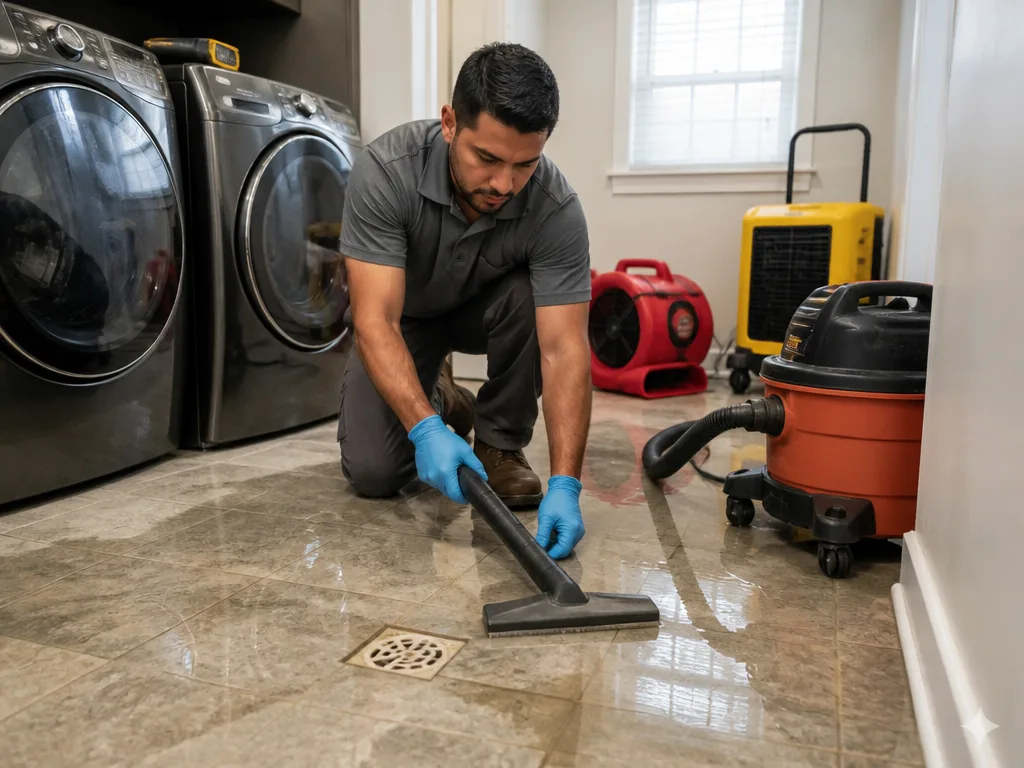
About appliance leak cleanup
Our leak cleanup service for Chicago homes covers the full sequence from first call to dry floor. We start by addressing the source where it is safe to do so, then remove standing water with commercial extraction equipment. Next, our restoration specialists check the subfloor, baseboards, and cabinet bases with moisture readings to see how far the water traveled. Air movers and dehumidifiers then pull moisture out of the materials so they can dry instead of rotting, warping, or growing mold. We also explain what we found, what we dried, and what may need repair later. This service suits homeowners, landlords managing Chicago rental units, and property managers in buildings across the city and nearby suburbs who need a quick, organized response to a washer or refrigerator leak.
Signs you need appliance leak cleanup
- Water pooling around the washing machine or fridge after a laundry cycle or an ice maker run.
- A soft, spongy feel or squeaking sound when you walk across the kitchen or laundry room floor.
- Warped baseboards, peeling paint, or bubbling trim along the wall behind the laundry area or fridge.
- A musty smell in the kitchen or laundry room that does not fade even after you clean the floor.
- Stains or discoloration spreading across the ceiling or flooring in the room below the laundry area.
- Moisture under the fridge that keeps returning even after you dry the floor by hand.
Why choose Chicago Water Damage Restoration?
- Our crew is based in Chicago and understands how older building materials respond to moisture across the city's neighborhoods.
- We focus on fast response so water has less time to move into subfloors, cabinet bases, and wall cavities.
- Our restoration specialists explain each step in plain language so you always know what is happening in your home.
- We rely on moisture readings rather than guesswork to decide what can dry in place and what needs removal.
- Chicago homeowners, condo boards, and landlords across the city and nearby communities count on our organized process.
- We document conditions and drying progress with photos and notes, giving you a clear record for insurance or property management.
From phone call to finished job
Four straightforward steps. No upsells.
You tell us what happened, when it started, and where the water came from, so we know which crew and equipment to bring along.
The restoration specialist checks moisture levels in walls, floors, and subfloors, then marks which materials can dry in place and which need to come out.
Our crew sets up air movers and dehumidifiers, pulls out soaked drywall or carpet where needed, and cleans the space so mold has less to work with.
After the work wraps up, you'll receive a written summary of the readings and the work completed, and you can call the team anytime with questions.
What you get
Less subfloor replacement, because moisture gets pulled out before boards swell, soften, and rot.
Lower mold risk, since drying starts quickly after water first reaches building materials in your home.
Clear moisture readings that show exactly which areas dried fully and which need follow-up work.
A faster return to a usable kitchen and laundry room with less disruption to your daily routine.
Reduced odor, because damp materials and trapped water are removed rather than covered up.
Documented findings you can share with your insurance provider or property manager.
Talk to a local pro now
(312) 210-1316Questions about appliance leak cleanup
Don't see your question? Call (312) 210-1316 and we'll answer it.
How quickly should I call for leak cleanup after my washer floods?
Call as soon as you notice water, because it moves into subfloors and wall materials within hours. If you can do so safely, shut off the water supply to the machine and unplug the fridge when the floor is wet near power. Early drying reduces the chance that boards warp, odors set in, or moisture lingers longer than it should.
Will your crew need to move my washer or fridge to reach the leak?
Our restoration specialists usually need access behind and under the unit to check the subfloor and dry the space properly. We will work with you on the safest way to move it, and we recommend disconnecting power and water first. If the machine is heavy or the connection looks old, let us know before we arrive so the crew can plan accordingly.
Does leak cleanup include drying the subfloor under the kitchen or laundry room?
Yes, drying the subfloor is a core part of this service, because water that reaches it is the main reason damage spreads. We take moisture readings under flooring and along baseboards, then use drying equipment to pull moisture out. If boards are too damaged to dry, we will explain what we found and recommend next steps so you can decide with confidence.
How long does drying usually take in a Chicago home after a leak?
Drying time depends on how much water got in, which materials it touched, and the humidity in your home. Many jobs run several days with equipment in place, and our crew checks moisture levels at each visit until materials reach target readings. We will give you an estimated timeline after the first assessment and update you as drying progresses.
Can I file an insurance claim for a leaking washer or refrigerator?
Coverage depends on your specific policy and the cause of the leak, so we cannot promise that your insurer will pay. We can provide photos, moisture readings, and a written summary of the work performed, which many adjusters find helpful. We suggest contacting your insurance provider soon after the leak and keeping receipts for any emergency steps you take.
Need appliance leak cleanup today?
Real local restoration specialists. Careful work. One call away.