
Crawl Space Drying in Chicago Homes That Stops Mold Early
Chicago's older bungalows, greystones, and two-flats often sit over crawl spaces that quietly collect moisture. Rain soaking the yard, snowmelt seeping through foundation walls, and humid summer air can leave standing water or damp soil under your home for days…
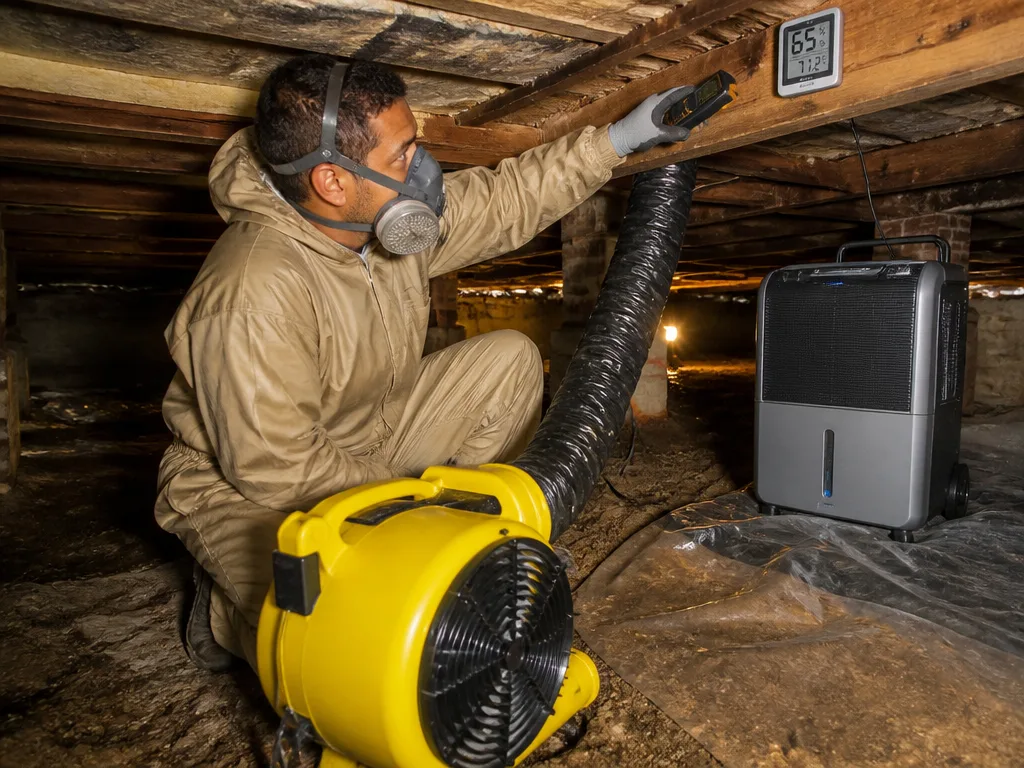
About crawl space drying
Crawl space drying covers the full path from wet to dry. Our crew starts with a walkthrough to find where water is entering, whether through a cracked wall, a low grade outside the foundation, or a sump that is not keeping up. We then remove standing water, clear out wet debris, and take moisture readings across the joists, subfloor, and vapor-exposed surfaces so we know exactly what needs to dry. Drying equipment is placed to move air across every affected area, and we monitor readings daily until the materials reach dry standards. This service is for Chicago homeowners who notice a musty smell upstairs, sagging or soft flooring, or water left behind after a heavy storm, and for property managers who need a dependable plan for a damp crawl space in a multi-unit building. We document each step with readings and photos so you have a clear record of the work.
Signs you need crawl space drying
- A persistent musty smell drifting up through floor vents or from closets over the crawl space area.
- Visible water pooling, damp soil, or puddles when you open the crawl space access hatch after rain.
- Floors that feel soft, spongy, or slightly bouncy in rooms located directly above the crawl space.
- Wood joists or subfloor boards that look darkened, stained, or show a fuzzy growth on the underside.
- Condensation on pipes, ductwork, or foundation walls inside the crawl space during humid Chicago summers.
- Higher indoor humidity readings or allergy-like symptoms after heavy rain or snowmelt season begins.
Why choose Chicago Water Damage Restoration?
- Our restoration specialists are based in the Chicago area and understand the older foundations common across the city.
- We measure moisture in the framing and subfloor with readings, not guesses, before and after every drying job.
- Our crew explains each step in plain language so you know what we found and why it matters for your home.
- We set up drying equipment sized to your crawl space and check progress daily until materials reach dry standards.
- We provide a written summary of readings and recommended next steps so you can plan any repairs with confidence.
- Our team responds to Chicago homeowners and property managers quickly after storms when damp crawl spaces need attention.
From phone call to finished job
Four straightforward steps. No upsells.
You tell us what happened, when it started, and where the water came from, so we know which crew and equipment to bring along.
The restoration specialist checks moisture levels in walls, floors, and subfloors, then marks which materials can dry in place and which need to come out.
Our crew sets up air movers and dehumidifiers, pulls out soaked drywall or carpet where needed, and cleans the space so mold has less to work with.
After the work wraps up, you'll receive a written summary of the readings and the work completed, and you can call the team anytime with questions.
What you get
Drying the joists and subfloor limits the moisture mold needs to take hold in hidden framing.
Dry structural wood keeps floors firmer and reduces the risk of sagging over time.
Lower humidity under the home can make indoor air feel fresher and reduce musty odors upstairs.
Moisture readings documented before and after drying give you a clear record for insurance or your records.
Catching damp conditions early often means a smaller, less disruptive job than waiting for visible damage.
A dry crawl space helps protect stored items, HVAC components, and insulation from moisture-related wear.
Talk to a local pro now
(312) 210-1316Questions about crawl space drying
Don't see your question? Call (312) 210-1316 and we'll answer it.
How do I know if my Chicago home's crawl space needs drying?
Common signs include a musty odor upstairs, standing water or damp soil when you check the crawl space, soft or sagging floors above it, and condensation on framing or pipes. If you notice any of these after heavy rain or snowmelt, schedule an inspection so our restoration specialists can take moisture readings and tell you whether drying is needed.
How long does crawl space drying usually take?
Timing depends on how much water got in, how saturated the wood and soil are, and how much airflow the space can support. Many jobs run several days, with our crew checking moisture readings daily. We will give you an estimated timeline after the initial inspection and update you as readings improve toward dry standards.
Will drying my crawl space stop mold completely?
Drying removes the moisture mold needs to grow, which is the most important step in limiting its spread. It does not by itself remove existing mold growth. If our inspection finds visible growth, we will explain what we see and recommend the appropriate next steps so the area can be properly addressed and monitored.
Do you work in Chicago neighborhoods and nearby suburbs?
Yes. Chicago Water Damage Restoration serves homes and buildings across Chicago neighborhoods and nearby suburbs. Whether your home is a Chicago bungalow, a two-flat, or a single-family house in a surrounding community, call us and a restoration specialist will confirm availability and arrange an inspection.
Is crawl space drying covered by homeowners insurance?
Coverage depends on your specific policy and the cause of the water intrusion, such as a sudden storm event versus long-term seepage. We can provide moisture readings, photos, and a written summary of the work performed to help you discuss the claim with your insurer. We recommend reviewing your policy or contacting your agent for details on what is covered.
Need crawl space drying today?
Real local restoration specialists. Careful work. One call away.