
Chicago Emergency Water Removal: Fast Response When Water Floods Your Home
When water starts spreading across your floors in Chicago, every minute matters. Whether a burst supply line, a failed sump pump during a spring storm, or a washing machine hose that gave way overnight, standing water can soak into drywall…
About emergency water response
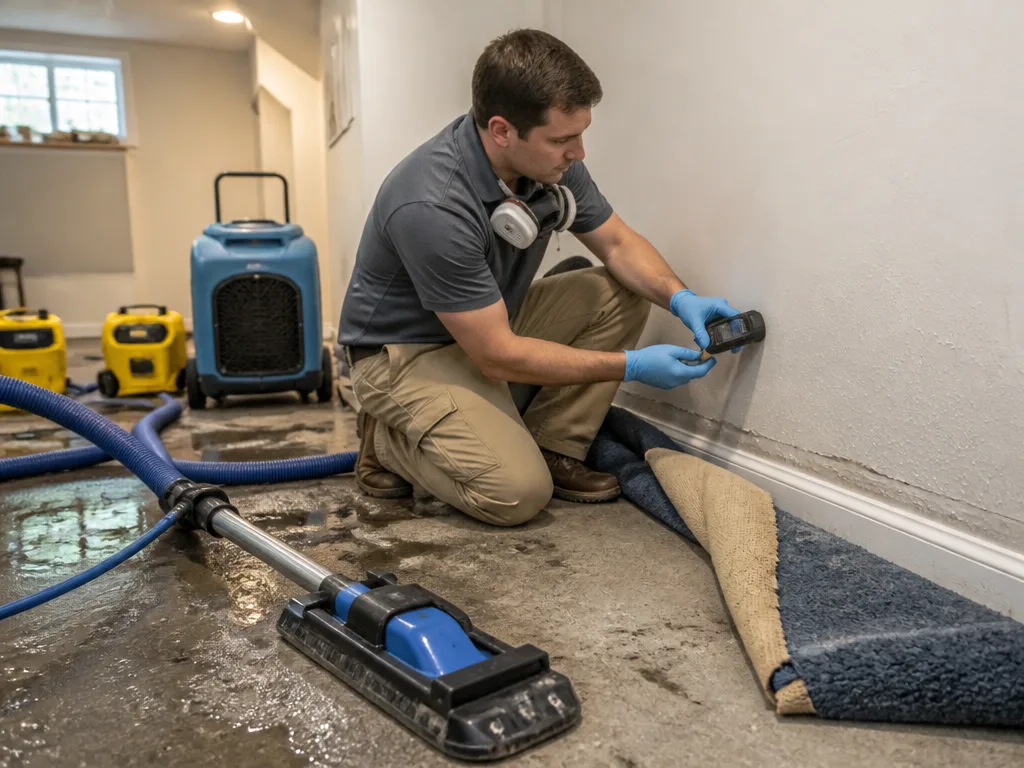
Emergency Water Response covers the first critical stage of water damage recovery. Our crew arrives, assesses how far the water has traveled, and begins extraction with commercial-grade equipment sized for the job. From there, restoration specialists use moisture meters and thermal readings to map wet materials behind walls, beneath flooring, and inside cabinets, so drying happens where the water actually went. We set air movers and dehumidifiers, monitor readings each day, and keep you informed about progress and what to expect. This service suits homeowners dealing with sudden leaks, property managers responding to tenant emergencies in multi-unit buildings, and small business owners who cannot afford days of disruption. If you are unsure whether your situation qualifies as an emergency, call us anyway. Early action is the single biggest factor in limiting long-term damage and repair costs.
Signs you need emergency water response
- Water is pooling on floors, spreading under doorways, or reaching baseboards and furniture legs.
- Walls, ceilings, or trim look darkened, bubbled, warped, or are suddenly soft to the touch.
- You notice a musty odor or damp smell that returns even after you have wiped surfaces dry.
- Ceiling stains are growing in size or new brown rings are appearing after heavy rain or snowmelt.
- Carpet, pad, or hardwood feels spongy underfoot, or floorboards have started to cup or buckle.
- Your water heater, sump pump, or a supply line has failed and you can see moisture spreading nearby.
Why choose Chicago Water Damage Restoration?
- Our team is based in Chicago and understands the older building stock, basements, and weather patterns that shape local water losses.
- We respond to emergency calls across Chicago and nearby communities with a focus on getting crews to your door promptly.
- Our restoration specialists use moisture meters and thermal imaging to find water you cannot see, not just the puddles on the floor.
- We communicate plainly about what we are doing, what the readings show, and what comes next, so you are never left guessing.
- We help document the loss with photos, moisture logs, and drying records that you can share with your insurance company.
- We treat your home like our own, protecting belongings, placing equipment carefully, and cleaning up our work before we leave.
From phone call to finished job
Four straightforward steps. No upsells.
You tell us what happened, when it started, and where the water came from, so we know which crew and equipment to bring along.
The restoration specialist checks moisture levels in walls, floors, and subfloors, then marks which materials can dry in place and which need to come out.
Our crew sets up air movers and dehumidifiers, pulls out soaked drywall or carpet where needed, and cleans the space so mold has less to work with.
After the work wraps up, you'll receive a written summary of the readings and the work completed, and you can call the team anytime with questions.
What you get
Standing water gets removed quickly, which reduces the chance of permanent floor and wall damage.
Hidden moisture inside walls and subfloors gets located and dried before mold has a chance to establish.
Your household can keep using unaffected rooms while our crew works on the damaged areas.
Clear daily updates on moisture readings let you understand exactly when the drying process will finish.
Documented readings and photos support your conversations with your insurance adjuster.
A faster response often means smaller repair scopes, which can lower the overall cost of your recovery.
Talk to a local pro now
(312) 210-1316Questions about emergency water response
Don't see your question? Call (312) 210-1316 and we'll answer it.
How quickly can a crew reach my home in Chicago after I call?
We understand that water damage does not wait, so we prioritize emergency calls and aim to dispatch a crew as quickly as our schedule allows. When you call, share your address, what you are seeing, and whether the water source is still active. Our team will give you a realistic arrival window and walk you through simple safety steps while you wait, such as switching off power to affected areas if it is safe to do so.
Will you help me work with my homeowners insurance company?
Yes. Our restoration specialists document the loss with photos, moisture readings, and a detailed log of the drying process. These records can help your insurance adjuster understand the scope of the damage. We do not decide your coverage, and we recommend reviewing your policy and speaking with your insurer directly, but we will provide the documentation you need to support your claim.
What should I do before the restoration team arrives?
If it is safe, turn off electricity to affected rooms at the breaker and avoid walking through standing water. Move valuables, electronics, and rugs to dry areas if you can do so without risk. Take photos and video of the damage for your records. Do not attempt major demolition yourself, since opening walls or pulling materials without assessment can spread moisture further. Our team will guide you through the next steps once we arrive.
Do you handle water damage in older Chicago buildings and basements?
Yes. Chicago has many older homes, two-flats, and basement apartments with plaster walls, original hardwood, and subfloors that hold moisture for longer than newer construction. Our restoration specialists are familiar with these conditions and adjust extraction and drying methods to protect historic materials where possible. We also handle common basement losses from sewer backups, sump failures, and heavy rainfall, working carefully around stored belongings and finished spaces.
How do I know when the emergency response phase is finished?
The emergency response phase ends when standing water has been removed and moisture readings show that affected materials are drying as expected. Our team tracks readings daily and will tell you when the equipment can come out. At that point, you will have a clear picture of what was affected and whether any materials need repair or replacement. Any reconstruction work is discussed separately so you can make informed decisions at your own pace.
Need emergency water response today?
Real local restoration specialists. Careful work. One call away.