
Chicago Moisture Detection: Find Hidden Water Before It Spreads
When water gets into a Chicago home or business, the visible puddle is often the smallest part of the problem. Water wicks into drywall, soaks under hardwood, and travels along joists and subfloors where no one can see it.
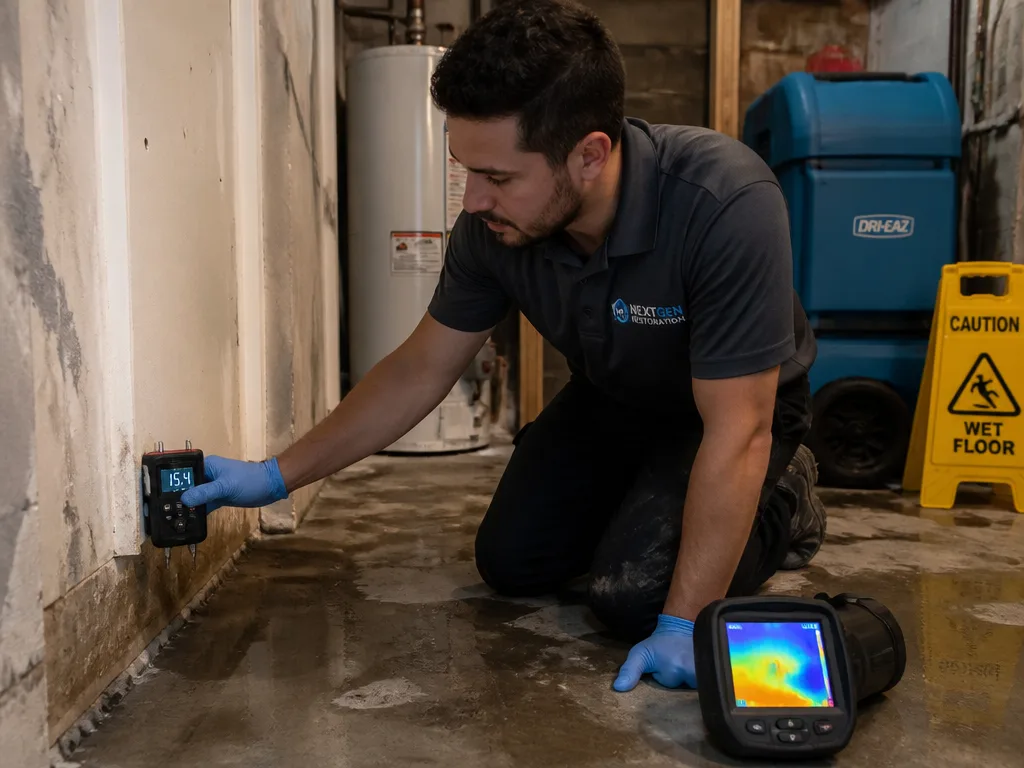
About moisture detection
Moisture detection is a focused inspection that happens before demolition and drying begin. Our team walks through the affected rooms, checks adjacent spaces that might have absorbed water, and documents moisture levels with readings you can review. Thermal imaging lets us scan surfaces without cutting into them, which means fewer unnecessary openings and less disruption to your daily routine. This service fits homeowners dealing with a recent flood, property managers responding to a tenant complaint about a musty smell, and business owners who need a clear picture of damage before talking with an insurance adjuster. It is also useful for buildings with older plumbing or previous water events where moisture may still be lingering. We share findings in plain language so you understand what was found, where it was found, and what the next steps look like.
Signs you need moisture detection
- Musty or earthy odors in a room that have no obvious source and seem to get stronger over time.
- Baseboards, trim, or paint that bubble, peel, or feel soft to the touch near an exterior or plumbed wall.
- Hardwood or laminate floors that cup, buckle, or develop dark stains after a recent rain or plumbing issue.
- Water stains or discoloration on ceilings that reappear after you repaint them.
- Visible condensation or damp patches on windows, walls, or basement surfaces during Chicago's cold winter months.
- A recent water event such as a burst pipe, appliance overflow, or storm intrusion where you are unsure how far the moisture traveled.
Why choose Chicago Water Damage Restoration?
- Our restoration specialists are based in Chicago and know how older masonry, plaster walls, and vintage plumbing behave across the city's neighborhoods.
- We use calibrated moisture meters and thermal imaging on every detection job, not just when a project seems large.
- We explain every reading in plain language so you know exactly what we found and why it matters for your property.
- Our crew responds quickly to Chicago emergencies, because delayed detection often means more hidden damage and higher repair costs.
- We document moisture maps with photos and readings that you can share with contractors, property managers, or insurance adjusters.
- We treat detection as the first step of a complete restoration plan, so the drying work that follows is targeted and accountable.
From phone call to finished job
Four straightforward steps. No upsells.
You tell us what happened, when it started, and where the water came from, so we know which crew and equipment to bring along.
The restoration specialist checks moisture levels in walls, floors, and subfloors, then marks which materials can dry in place and which need to come out.
Our crew sets up air movers and dehumidifiers, pulls out soaked drywall or carpet where needed, and cleans the space so mold has less to work with.
After the work wraps up, you'll receive a written summary of the readings and the work completed, and you can call the team anytime with questions.
What you get
Drying equipment is placed where moisture actually sits, which shortens drying time and reduces wasted effort.
Hidden water is found before it feeds mold growth inside wall cavities and beneath flooring.
Thermal imaging lets us check surfaces without unnecessary cutting, keeping your walls and floors intact.
You receive documented moisture readings that help you understand the scope of damage in clear terms.
Early detection can reduce the total size of the repair scope, which may limit costs for rebuilding materials.
Documented findings give your insurance adjuster accurate information to support your claim.
Talk to a local pro now
(312) 210-1316Questions about moisture detection
Don't see your question? Call (312) 210-1316 and we'll answer it.
What does a moisture detection inspection involve in a Chicago home?
A moisture detection inspection involves our restoration specialists walking through affected rooms and adjacent spaces with moisture meters and a thermal imaging camera. We take readings on walls, floors, and ceilings, note the locations, and document everything with photos. The process is non-invasive in most cases and usually takes one to three hours depending on the size of the property and how far water may have traveled.
How is thermal imaging different from a standard moisture meter?
A moisture meter measures moisture content at the points where its probes or sensors touch a surface, so it provides precise readings in specific spots. Thermal imaging captures temperature differences across a whole wall or floor, which often reveal areas where water is evaporating or holding heat differently. Using both tools together helps us find hidden moisture faster and confirm the exact boundaries of the affected area.
Will moisture detection require opening up my walls or floors?
In many cases, moisture detection does not require any demolition at all, because thermal imaging and meter readings can be taken from the room surface. If we suspect moisture inside a wall cavity or beneath flooring, we will explain why and discuss the minimal openings needed to confirm the problem. We always talk with you before making any cut, so you know exactly what to expect.
How soon should I schedule moisture detection after a water event in Chicago?
You should schedule moisture detection as soon as possible after water enters your property, ideally within a day or two. Hidden moisture can begin feeding mold growth and weakening building materials quickly, especially in Chicago's humid summers. Calling early gives our restoration specialists the best chance to find all affected areas before materials are permanently damaged.
What will I receive after the moisture detection is complete?
After the inspection, we provide a summary of moisture readings, thermal images, and photos showing where water was found and how far it spread. We also explain the recommended next steps, which may include drying, targeted removal of damaged materials, or further evaluation. You can keep these records for your files and share them with your insurance adjuster, property manager, or contractor as needed.
Need moisture detection today?
Real local restoration specialists. Careful work. One call away.