Why Cook County's risk profile matters for your basement
FEMA's National Risk Index rates Cook County Very High for inland flooding, heat waves, cold waves and winter storms. That's a lot of risk categories stacked on top of each other. If you live in Chicago, you've probably already seen some of it, whether that's a basement that smelled off after a July downpour or a ceiling stain that showed up after a February thaw.
NOAA logged 306 damaging-wind reports, 79 hail reports, 53 flood reports and 25 tornado reports in Cook County from 2022 to 2024. Those numbers are a reminder that water rarely comes in through one obvious door. Wind rips off shingles, hail dents flashing, and then the next heavy rain finds the gap. By the time you notice water on the floor, it may have been working its way into the wall cavity for days.
We see this pattern constantly across the city, from Rogers Park greystones to brick bungalows in Beverly. The weather is different on each block, but the sequence looks similar. Something lets water in, it sits in a material that can't dry on its own, and the damage spreads quietly until someone smells it or sees a bubbling wall.
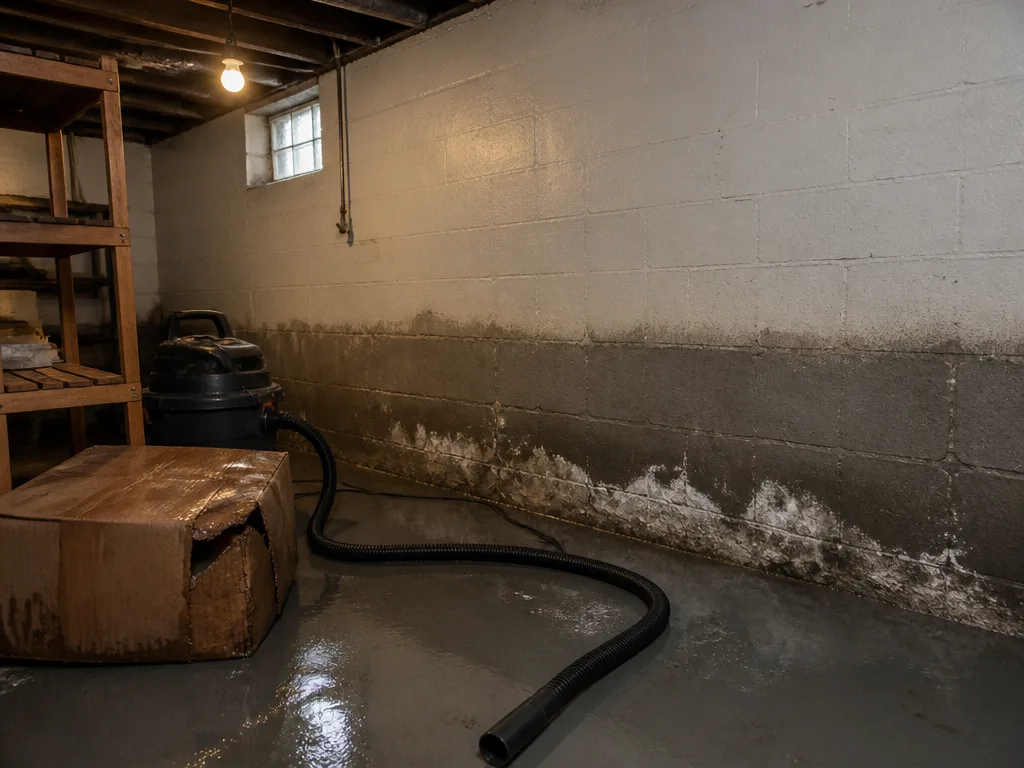
Knowing the local weather pattern helps you figure out where to look first. A roof problem usually shows up on upper ceilings and along exterior walls on the top floor. A grade or window problem usually shows up at the basement level, often near the floor or along the bottom of a wall.
Freeze and thaw cycles in older Chicago homes
Homes in Chicago were typically built around 1952, and 60% of them predate 1960. That means a lot of plaster, lath, older masonry and framing that were never designed for the kind of wet-dry-wet-dry cycling a Chicago winter delivers. Snow melts, refreezes, melts again, and each cycle pushes a little more moisture into brick, mortar and the wood around window openings.
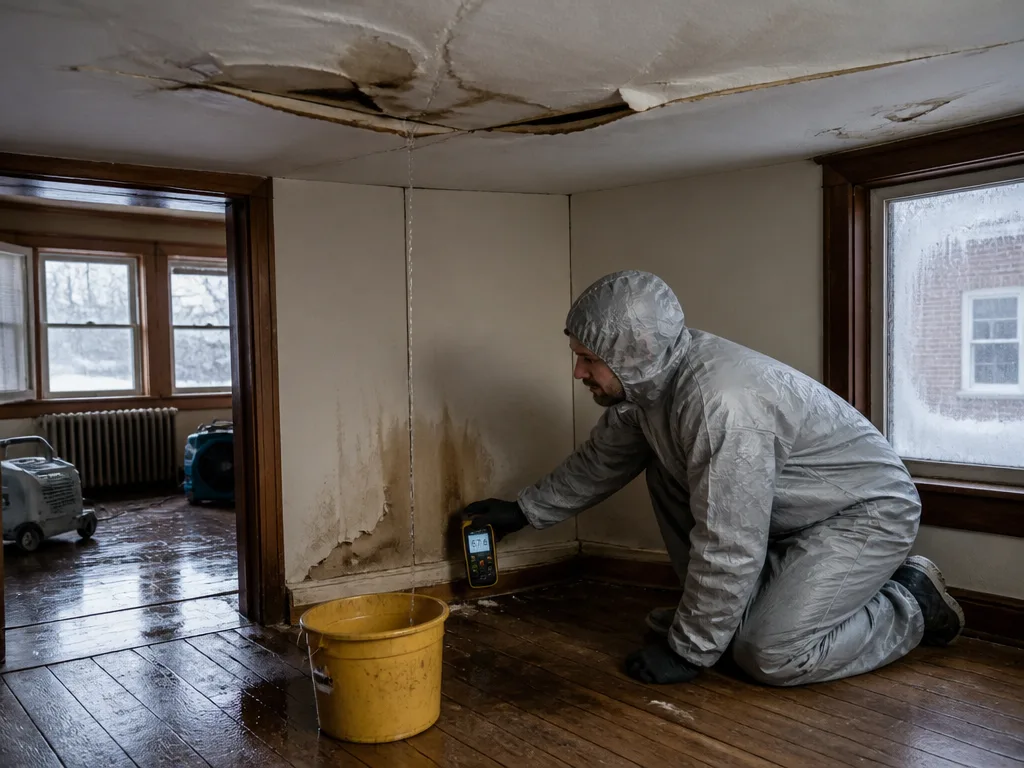
Ice dams are the big one. When heat escapes through the attic and warms the roof, snow melts and water runs down until it hits the cold edge of the eave and freezes. That ice creates a dam, and the next melt has nowhere to go but up under the shingles. Water then travels along rafters and comes out where you least expect it, often at an exterior wall or a corner of a ceiling on the top floor.
Window wells and tuckpointing are the other common culprits in older Chicago homes. A cracked window well cover that collects leaves and snowmelt can send water straight down against a foundation wall. A spot of failed mortar might sit quietly for years until a wet March pushes water through.
What to look for after a thaw
- Stains or soft spots in ceiling corners, especially where an exterior wall meets the roofline
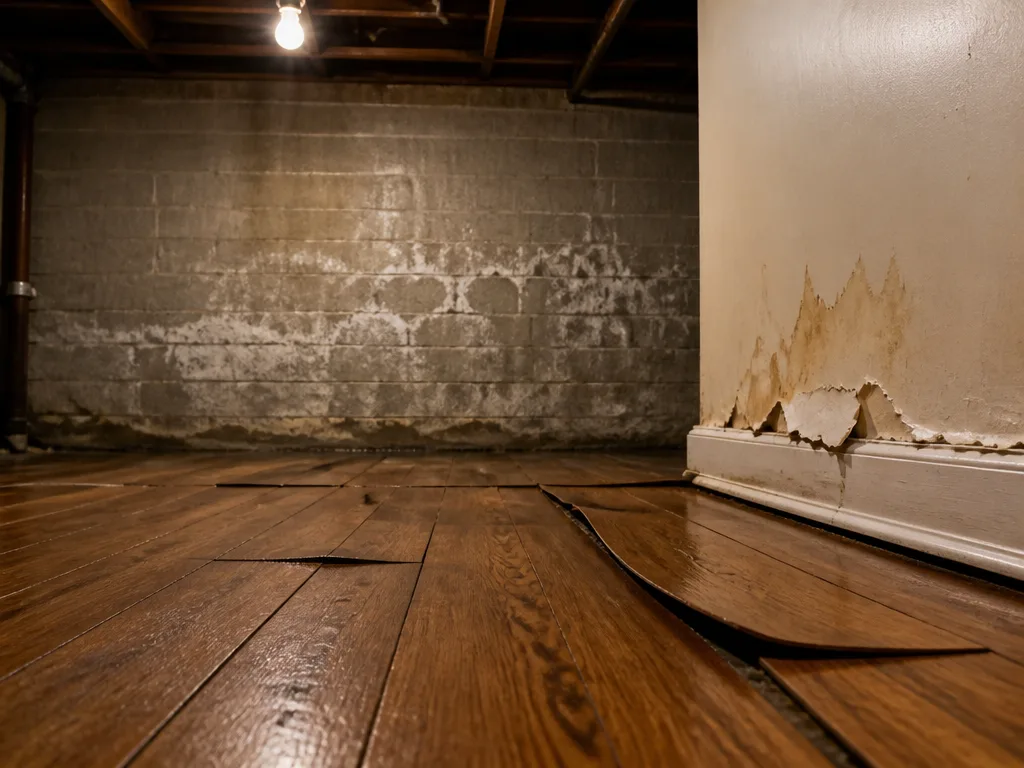
- Drywall or plaster that feels soft, sags or has begun to pull away from the trim
- A musty smell in the basement that gets stronger after snowmelt, even when the floor looks dry
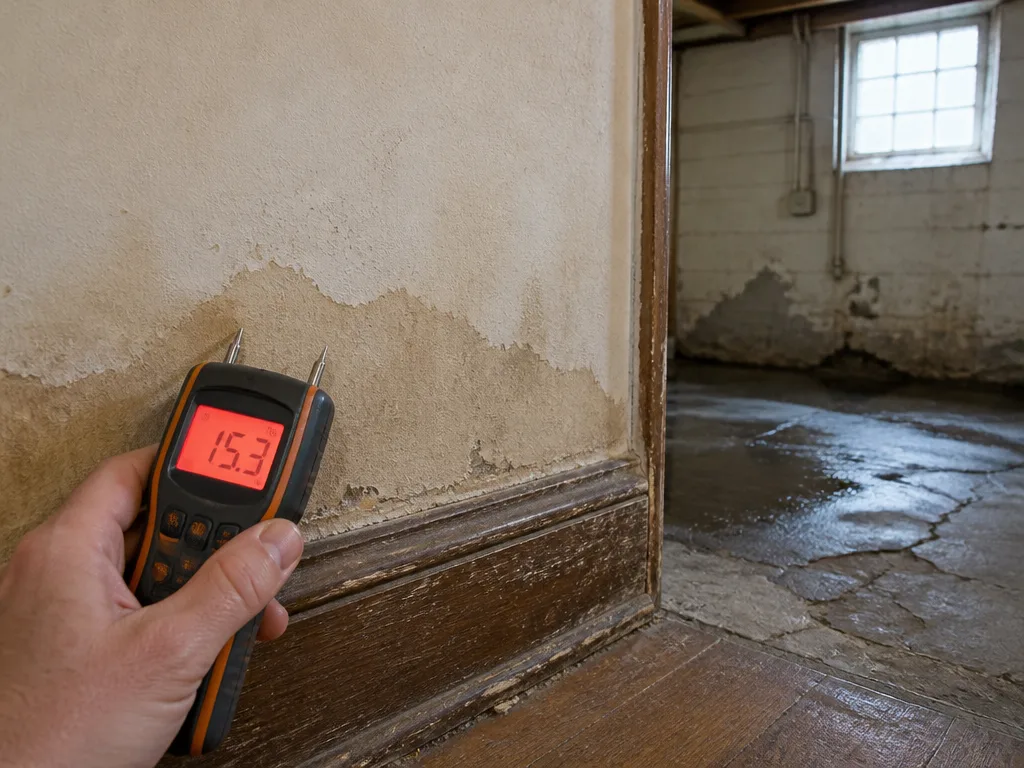
- Paint that bubbles or peels near windows, doors or the bottom of exterior walls
- Hairline cracks that seem to widen or darken after a few freeze-thaw cycles
If you spot one of these after a thaw, don't wait for spring to see if it dries out on its own. Wood and drywall that stay damp through the cold months can start to rot or grow mold before the weather warms up enough to notice.
Spring storms, summer humidity and heat waves
Chicago's spring is when a lot of water damage calls come in. Heavy rain arrives before the ground has fully thawed, so the soil can't absorb much, and water pools against foundations. Add damaging wind and hail to the mix, and roofs and siding take hits that don't show up until the next storm.
Summer brings a different problem. Heat waves and humid stretches mean wet materials dry more slowly, especially in basements and crawl spaces that already run cool and damp. A room that would dry in a few days in January can stay soggy for a week in July because the air is already loaded with moisture. That's why we pay attention to humidity levels in the rooms we work on, not just whether the surface feels wet to the touch.
Heat also changes how quickly materials start to suffer. Warm, wet conditions speed up mold growth, and mold can start colonizing drywall and wood framing within a day or two in the right conditions. If the water came in during a summer storm, the clock matters even more.
How your heating system affects drying
About 80% of Chicago homes heat with natural gas, and roughly 16% use electricity. That split matters when you're drying out a home. A warm, controlled environment helps moisture leave building materials, and the heating system you already have will shape how you get there.
In winter, many homeowners want to shut the heat down when water is present, thinking it'll stop the problem. Usually the opposite is true. Keeping the home at a steady temperature, rather than letting rooms swing cold, helps materials release moisture in a more controlled way. The trick is balance: enough warmth to help drying, enough airflow to carry moisture out, and no sealed-up rooms where humidity builds.
Electric heat homes often have different zones and fewer large vents, so drying plans sometimes look different than they would in a gas-heated bungalow with a single furnace. Our restoration specialists take the heating setup into account when they map out where moisture is hiding.
The first few hours after water shows up
You don't need to be a restoration specialist to make the first hours count. Start with safety. If water is near electrical cords, a power strip, a panel or any device plugged in, stay out of the water and shut off power at the breaker only if you can reach it safely. If you can't, call the utility and keep people away from the area.
Next, take photos and video of the damage before you move anything. Capture the water line, the ceiling, the floor and any furniture that got wet. Those images help you remember what happened and make the rest of the process easier to follow.
Then move what you can. Pull rugs, cushions and books off wet floors, and lift items off the ground if you can do it without spreading water around. Open windows only if the outdoor air is drier than the indoor air, which in a Chicago summer often isn't the case.
When you're ready for help, give Chicago Water Damage Restoration a call. Tell us where the water came from, how long it's been sitting, what kind of storm or thaw preceded it, and whether the home's heat is currently running. Those details help our team figure out what kind of drying and inspection work the house needs before anything else gets worse.