If you live in Chicago long enough, you learn that water finds every weak spot in a house. A heavy rain on the North Side, a backed-up floor drain in Bridgeport, a washing machine hose that finally gave out in a Logan Square two-flat. Most of the time the damage starts small. A damp patch. A faint smell. Then it gets worse while you're busy with work and dinner and everything else. Chicago Water Damage Restoration sees this pattern all the time, and we want homeowners to know which signs mean the situation can't wait.
The signs that mean you need help now
Some water problems can wait a day or two while you sort out the details. Others can't. The big ones are easy to recognize once you know what to look for.
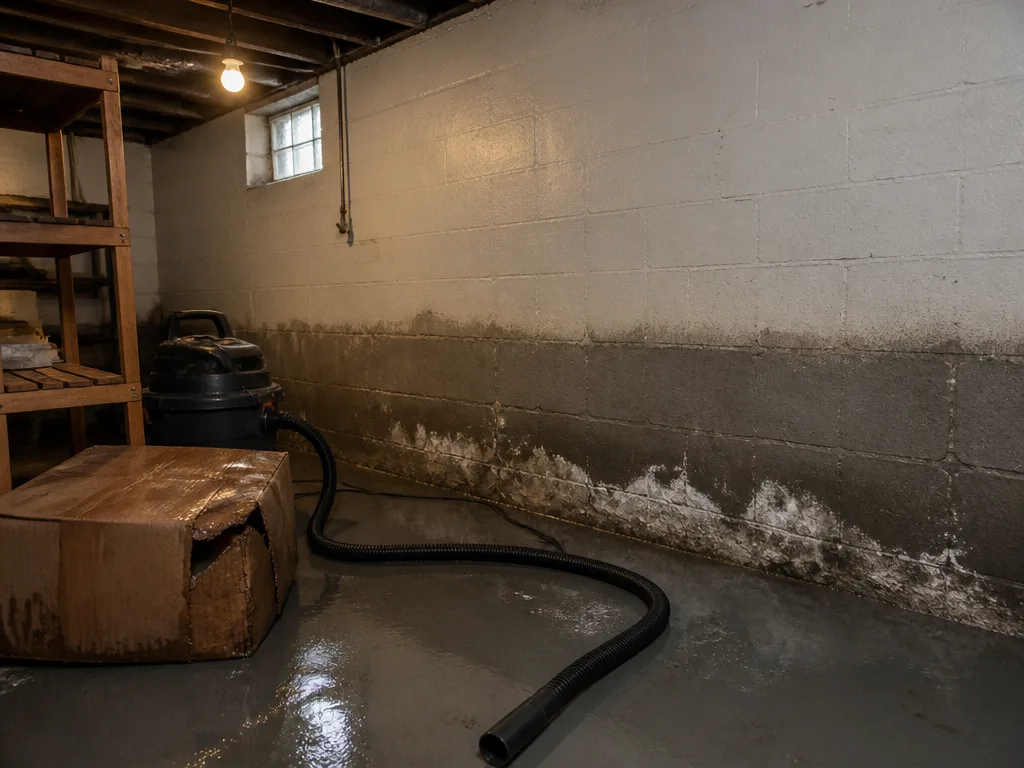
Standing water is the obvious one. If you can see water on the basement floor, in a crawlspace, or spreading across hardwood, the clock is already running. Water that sits for more than a day or two starts soaking into subfloors, drywall, and the wood framing behind your walls. Older Chicago homes, especially the brick bungalows and greystones with original plaster, can hold moisture in ways you won't see until the paint starts lifting.
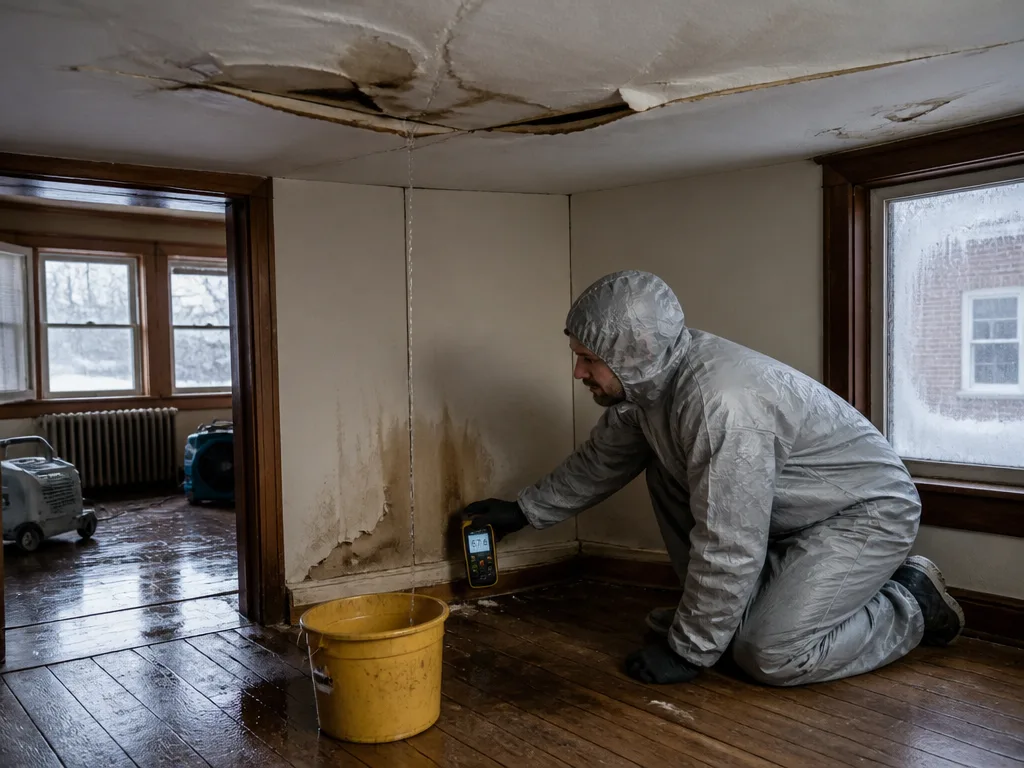
Ceilings and walls are the next place to check. A brown ring on the ceiling that keeps growing, paint bubbling away from the wall, or drywall that feels soft when you press it with a finger all point to water that has moved past the surface. Don't poke at it with a screwdriver to test. Just look and touch gently, then make the call.
Then there's the smell. A musty, earthy odor in a basement or closet usually means moisture has been trapped for a while. If you notice it after a storm, or it's stronger than it was last week, trust your nose. It's often the first sign that something behind a wall or under a floor is holding water.
- Water that has been sitting for more than 24 hours
- Ceiling stains that are spreading or darkening
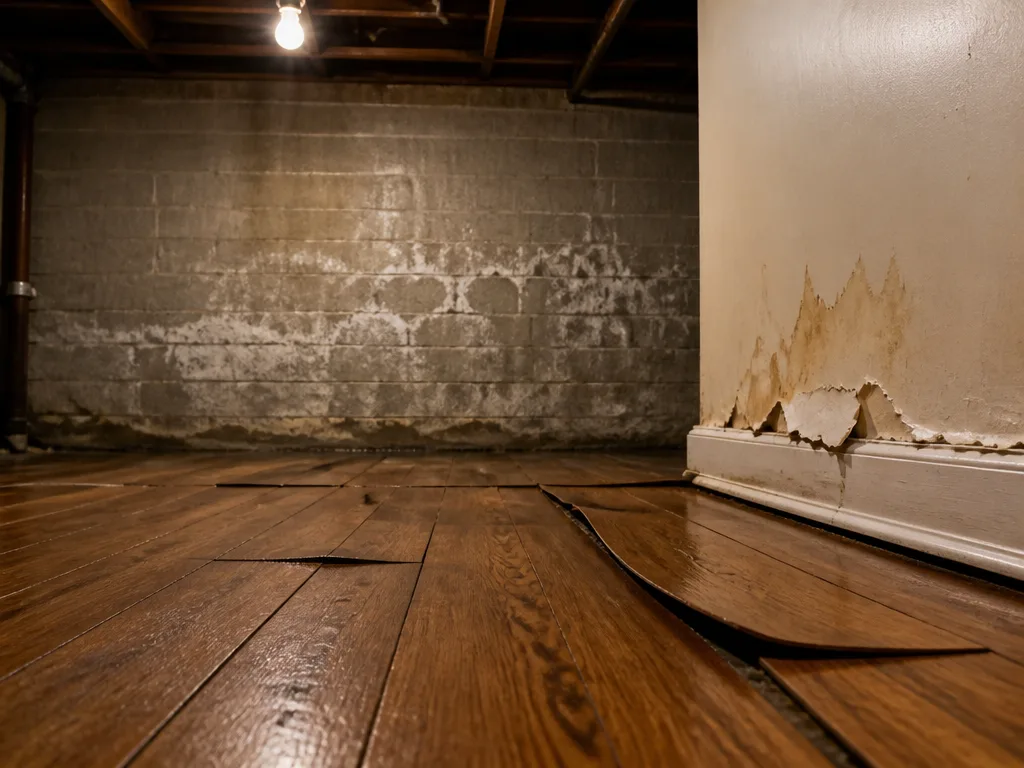
- Soft, sagging, or warped drywall, baseboards, or floorboards
- A persistent musty smell that doesn't go away with airing out the room
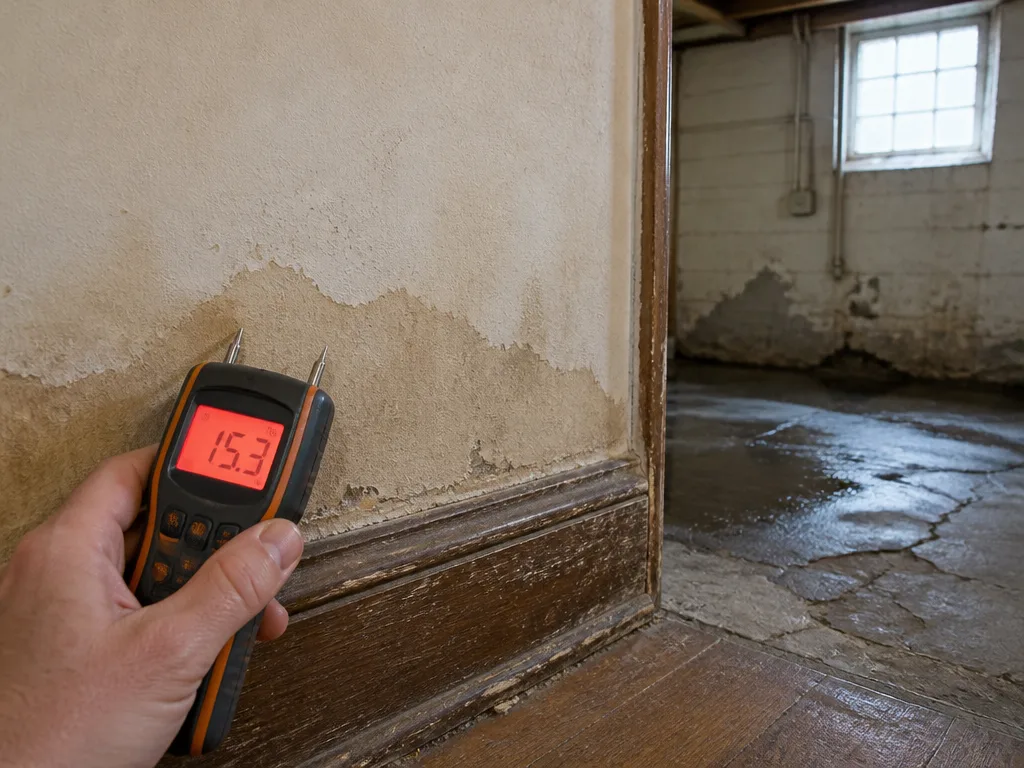
- Cracked or peeling paint in a band along the bottom of a wall
What to do in the first hour
Once you see the signs, the first thing to do is protect yourself. Turn off electricity to the affected area at the breaker if you can reach it without standing in water. If water is near outlets, light fixtures, or the panel, stay out of that space and wait for a licensed electrician or our crew to clear it. Nothing in the basement is worth a shock.
Next, stop the source if it's safe to do so. Shut off the main water valve if a supply line burst. If the water is coming in from outside during a storm, move anything you can out of its path. Set buckets under active drips and move furniture onto blocks or onto a dry surface away from the wet floor.
Take photos before you move or clean anything. Get wide shots of each room, close shots of stains and damaged materials, and a few of the water line on the walls. Write down roughly when you first noticed the problem and what you think caused it. Those notes help the restoration specialists understand how long the water has been in the structure, which affects what needs to come out.
What you can do while you wait
Waiting is the hard part. You want to do something, and a few simple steps really do help without making the damage worse.
Run fans and open windows if the weather is dry and the outside air isn't humid. In a Chicago July that can backfire, so use a dehumidifier if you have one. Keep the thermostat steady. Big swings in temperature can make warped flooring and trim move more. Lift area rugs and pull them off wet floors so they don't wick moisture into the padding and subfloor.
Be careful with cleaning. Blot standing water with towels or a wet-dry vacuum rated for water if you have one. Don't use an ordinary household vacuum, since that can short out. Skip the bleach and harsh cleaners until someone has assessed the area, because mixing products in a wet space can cause fumes and can also mask what's really going on underneath.
Keep people and pets out of the wet room. Put a sign on the door if you have kids who like to play in the basement. Slippery floors and loose wiring are a bad combination, and wet drywall can crumble when someone leans on it.
Things to avoid while you wait
Don't remove wet drywall or flooring yourself unless you've been told to by someone on site. It feels productive, but it can break the material in ways that make a proper restoration harder. Don't seal stains with paint or caulk, because that traps moisture underneath. And don't ignore the problem because the water stopped flowing. Sometimes the wettest material is the stuff you can't see yet.
How Chicago Water Damage Restoration approaches the job
When you call us, we'll ask a few questions about where the water came from, how long it's been there, and what's wet. That helps us plan what to bring and how many people to send. Our restoration specialists look at moisture in the materials, not just the visible puddle, and then explain what needs to come out, what can dry in place, and what the next steps look like. We'll walk you through it in plain language so you know what's happening in your home.
Chicago homes have their own quirks. Basements with older clay tile drains, brick walls that wick moisture from the outside, and multi-generation wiring all change how we work. We know the neighborhoods, the common failure points, and the kinds of storms that push water into the lower levels faster than the sewers can handle. That local experience shows up in the questions we ask and the way we set up the job.
If you're in Chicago or a nearby suburb and you're seeing any of the signs above, don't wait for the damage to make the decision for you. Call Chicago Water Damage Restoration and describe what you're seeing. We'll help you figure out how urgent it is and what to do next.