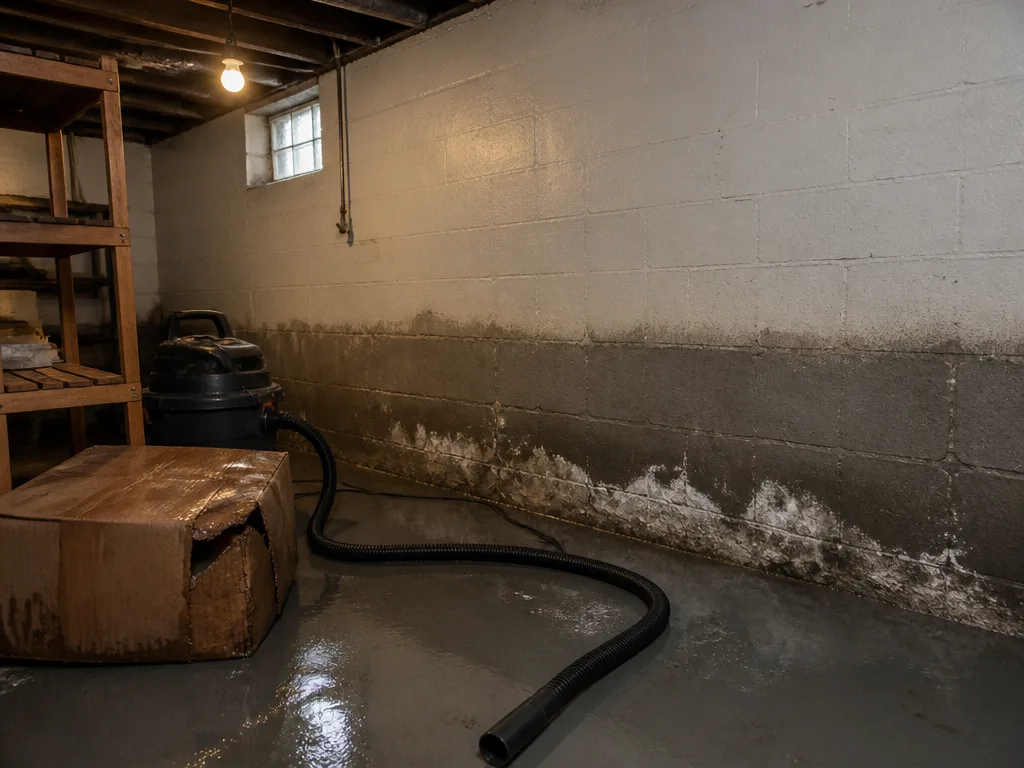
Most Chicago homeowners know what a flooded basement looks like. The water is obvious, and so is the mess. The harder problem is the water you can't see. After a storm rolls through or a supply line lets go behind a wall, a lot of moisture ends up in the framing, subfloor, and insulation, and it doesn't always show itself right away. Structural drying is the process of pulling that moisture out of the building itself, not just mopping up what's on top. Here are the signs we see most often in Chicago houses, and what each one usually points to.
Why Chicago homes hold water longer than you'd expect
Chicago has a lot of older housing stock. Greystones, bungalows, and two-flats from the early 1900s were built with masonry foundations, plaster walls, and wood framing that wasn't designed to sit wet. Add a wet spring, a fast snowmelt, or a summer storm that dumps two inches in an hour, and the ground around a foundation can stay saturated for weeks.
Moisture moves in one direction for a long time. It wicks up through concrete, soaks into the sill plate, and sits in the cavity behind the drywall. Surface water might be gone in a day, but the wood underneath can stay damp for much longer. That's the gap structural drying is meant to close.
Winter adds its own complications. A basement wall that took on water in October can freeze and crack in January, opening new paths for moisture the next time it thaws. If you've had any water event in the last year, it's worth paying attention to the signs below even if the carpet looks fine.
Signs that moisture is still in the structure
None of these signs proves anything by itself. Together, they tell a pattern. Here's what each one usually points to.
A musty smell that comes back after cleaning
If the basement smells damp a few days after you've run a fan and wiped the floor, moisture is still working somewhere you can't reach. Mold and mildew produce that earthy odor, and they need moisture to grow. The smell tends to be strongest near the bottom of walls, inside closets on exterior walls, and under stairs. When it lingers, the water is usually inside the wall cavity or the subfloor, not on the surface.
Baseboards or trim that pull away or cup
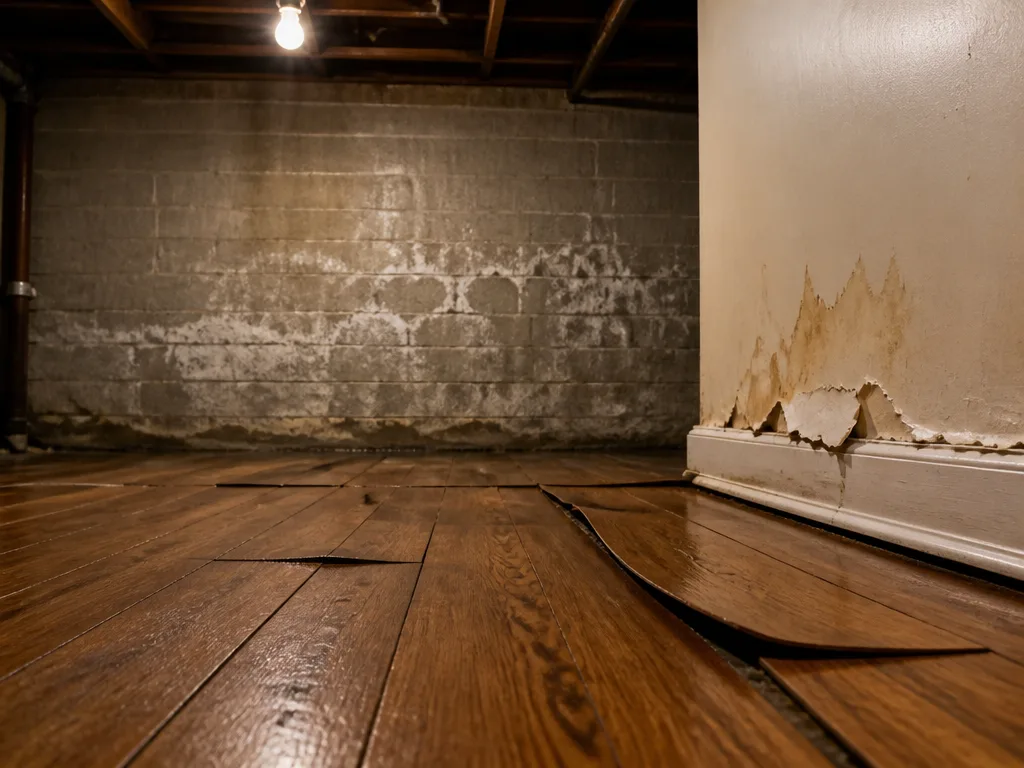
Wood trim that was dry for years and suddenly lifts from the wall is a strong sign of moisture underneath. Baseboards swell and separate from the wall as they absorb water from the back side. Door casings can bow too. If you pull gently on a piece of trim and it moves more than it should, don't just nail it back. Water is behind it.
Soft drywall, bubbling paint, or a stain that keeps growing
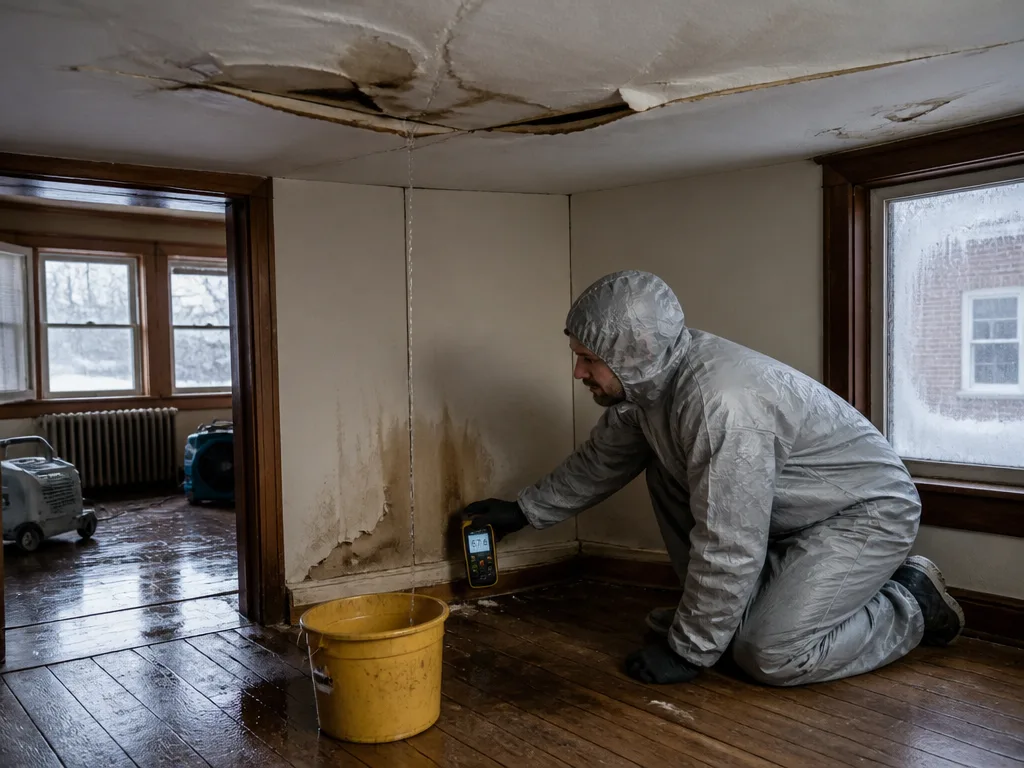
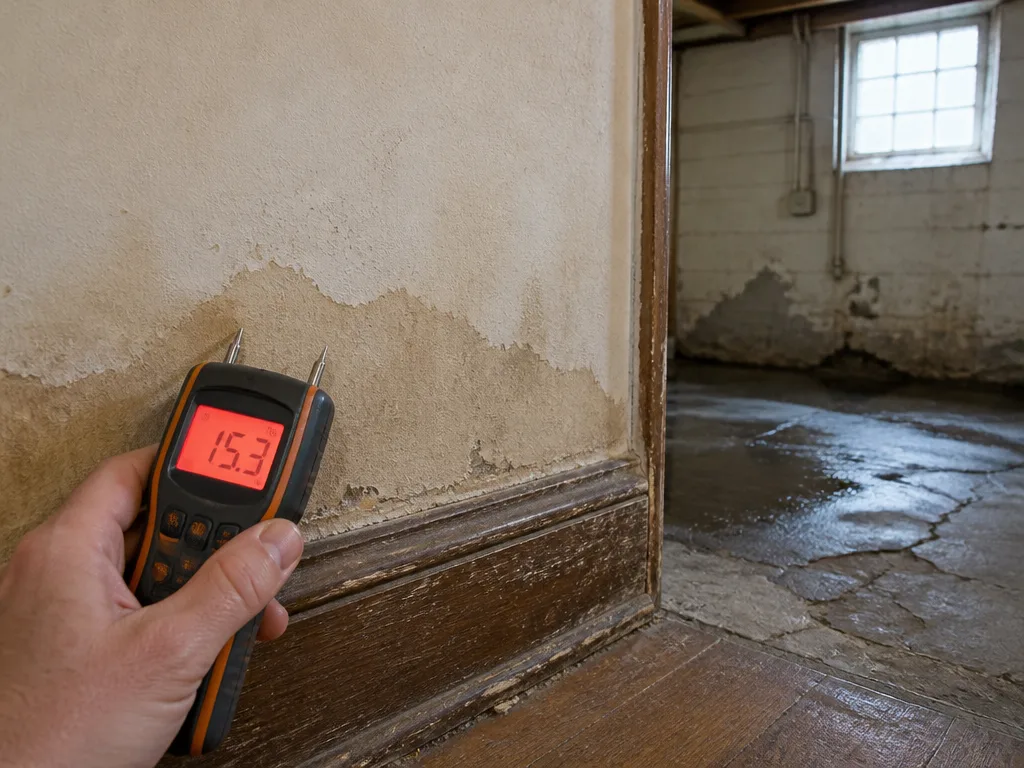
Drywall that feels soft or crumbles when you press it has absorbed water and lost its strength. Paint that bubbles or peels in a patch, especially a patch that gets bigger over a few weeks, usually means water is coming through from the back or below. A brown or yellow ring on a ceiling that keeps spreading is one of the clearest signals that the water source hasn't been dealt with.
Floors that cup, buckle, or feel spongy
Hardwood and engineered wood that edges up toward the middle of a board (cupping) or lifts at the seams has taken on moisture from below. Spongy spots near a tub, under a window, or along an exterior wall often mean the subfloor is wet. Vinyl plank can hide this for a while, so check the floor near walls and in corners where water tends to collect.
Condensation that won't clear off windows
Some condensation is normal in a Chicago winter. Constant fogging that stays on the glass for hours, or water beading along the sill, can point to high humidity in a space that isn't drying out. A basement with damp air and wet block walls will keep feeding moisture into the room even after the visible water is gone.
White, powdery residue on masonry
Efflorescence is the white crust that shows up on brick and block when water moves through them and leaves minerals behind. It isn't mold, and it isn't always dangerous, but it's a sign that water is passing through the wall material. If you see it on a foundation wall after a wet season, the wall is still carrying moisture.
What to do in the first couple of days
If you've had water in the house, start with the things you can control. Move furniture and rugs off wet areas so air can reach the floor. Pull up carpet padding if it's soaked, because padding holds water for a long time. Run dehumidifiers if you have them, and keep the room closed off from the rest of the house so moist air isn't spreading into dry rooms.
Take photos of every affected area before you move anything, and write down what you noticed and when. Those notes help whoever comes to look at the house understand how the water moved through the building. Don't cut into walls or pull up subfloor yourself unless you know exactly what you're looking at. Opening a wall without the right tools can spread moisture into spaces that were dry.
Be careful about the electrical side too. If water is near outlets, a panel, or a fixture, keep your distance and avoid switching anything on in that area until the room has been checked.
When a surface cleanup isn't enough
A surface cleanup can handle a spill on a tile floor. It won't reach water that soaked into framing, insulation, or a subfloor. If the signs above keep returning after you've dried the room and cleaned the floor, the moisture is almost certainly still inside the structure. That's when structural drying matters.
Structural drying uses controlled airflow, dehumidification, and moisture readings through the materials to find out where the water went and how long it's taking to leave. Our restoration specialists check walls, floors, and cavities with moisture meters and track the readings over time, so the drying work is based on what's actually happening inside your house, not on how the room looks. Every home is different, so the plan depends on the building and the water source.
How to reach Chicago Water Damage Restoration
If you're seeing any of the signs above in your Chicago home, give us a call. We'll ask you what happened, when you first noticed it, and what the affected areas look like. That conversation helps us decide what kind of visit makes sense and how soon we can get a restoration specialist to you. We'd rather hear from you early than have you wait until the drywall is coming off the studs.
Don't wait for the smell to go away on its own. In a Chicago basement or older two-flat, moisture that sits in the framing for a few weeks can turn a repair you could have handled into a much bigger job. Call Chicago Water Damage Restoration, describe what you're seeing, and let us help you figure out whether the water is still in the structure.